Linking developmental adaptations to perceptual innovations.
What we study
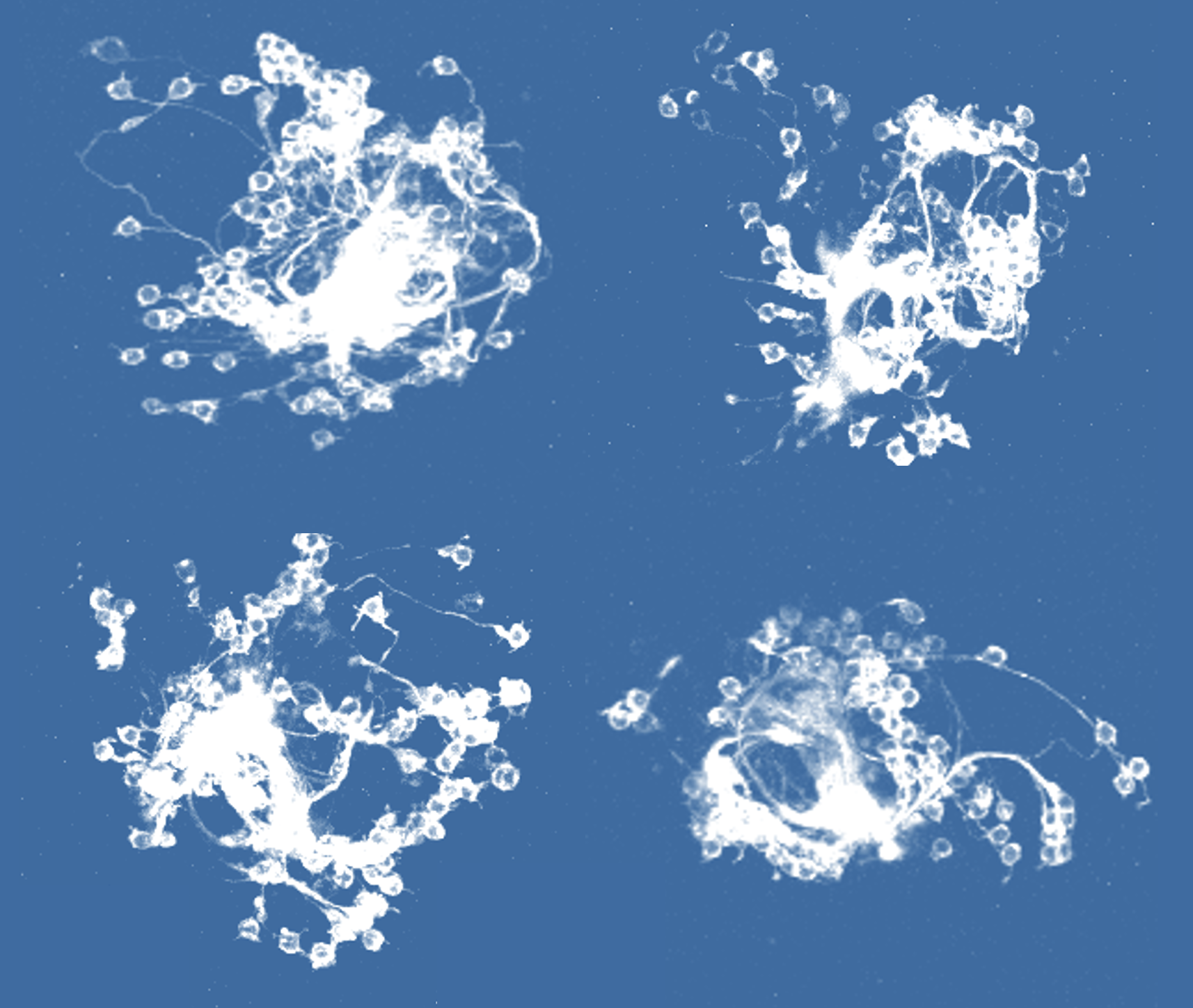
Animals use sensory information to build perceptions of the world. The Heckman Lab asks how neurodevelopmental programs constrain — and can be adapted to expand — the range of stimuli a brain can perceive, and how changes in sensory circuitry drive innovations in perception and learning.
We work in the insect mushroom body, an ancient integrative brain structure for associative learning, tracing how sensory circuits are wired during development and how that wiring shapes what an animal can learn and remember.
Lab Culture
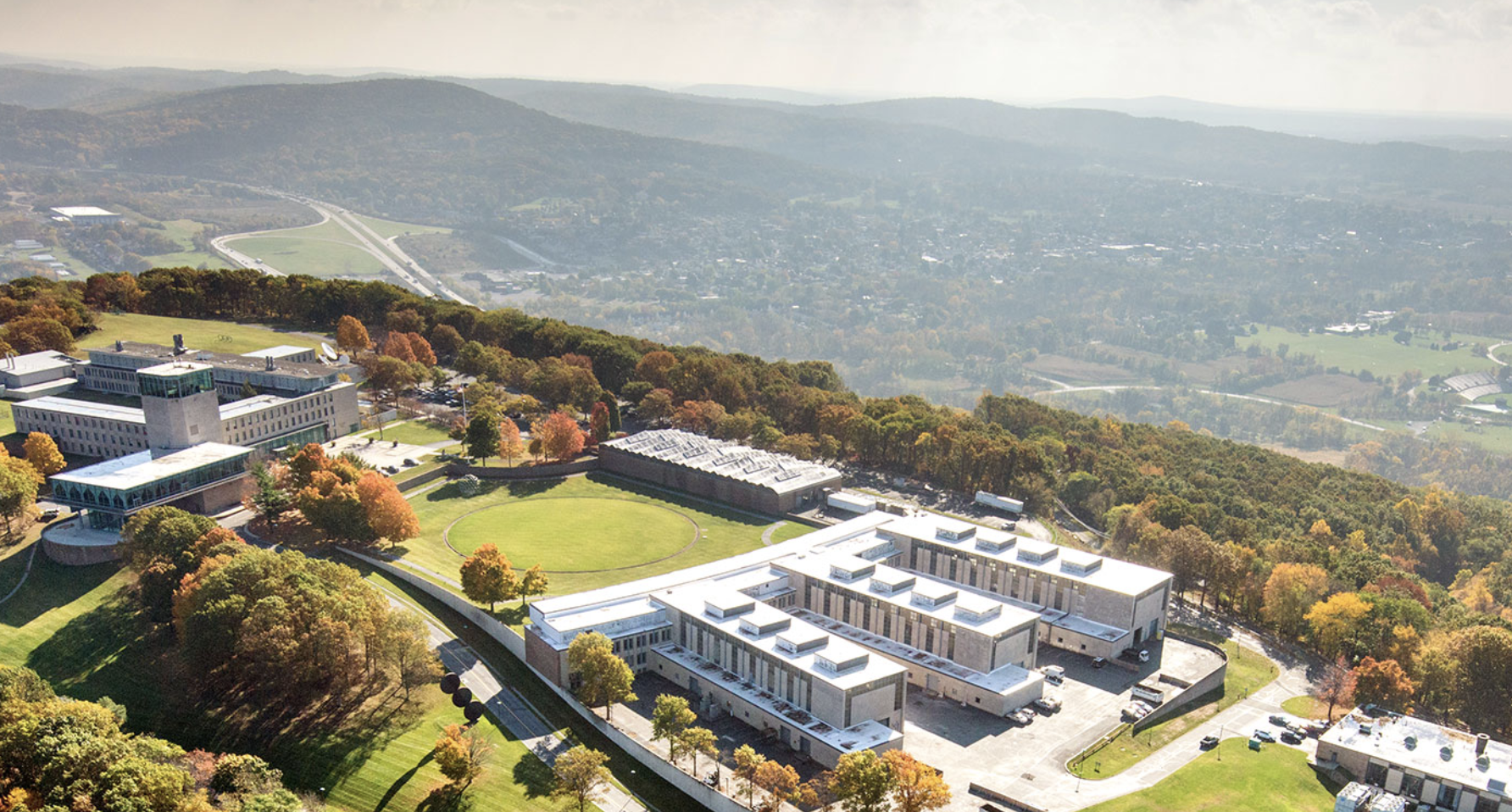
The Heckman lab will open at Lehigh University, where I was an undergraduate and first discovered a passion for research. I will strive to promote a lab culture that reflects what inspired me as a young scientist: the joy of discovery, opportunities for lifelong learning, and committed mentors.
As a mentor, my hope is for trainees to develop the skills and confidence to answer important questions while maintaining the sense of wonder that drew many of us to science in the first place. I believe that mentorship is a responsibility and a privilege; when someone chooses to spend part of their career in my lab, I will provide the support, opportunities, and advocacy they need to reach their goals.
As lab members, we have the opportunity to contribute to exciting scientific discoveries. To do the best science, we will work together as a team; regardless of career stage or experience, we respect that everyone has unique experiences and skillsets that we can learn from. As scientists, we are curious and committed to lifelong learning. This means we might not know the answer to some questions, but we have the drive and initiative to find out through reading, conversation, or experiments. We also like to have fun — bring us your weird animal facts, flaunt your beautiful data, and use us as your guinea pigs to test out new recipes. Above all, I hope the lab feels like a place where curiosity is nurtured and everyone can do their best work.
Research
Our goal is to determine the neural circuit parameters that constrain visual perception, and to define the developmental mechanisms that instantiate those parameters in the brain. We pursue this through parallel investigations of the fly and honeybee mushroom body — the fly's genetic toolkit lets us definitively link circuit form to perceptual function, while the honeybee serves as a case study in circuit innovations that support enhanced visual cognition.
Developmental mechanisms producing visual memory
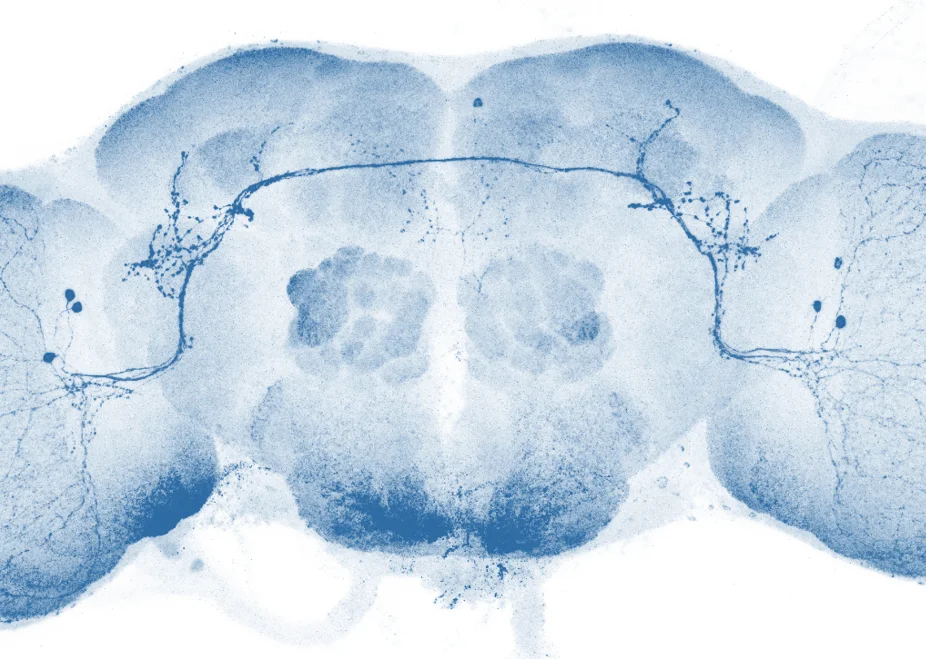
Despite sitting near hundreds of visual neurons, mushroom body neurons synapse with only a small fraction of visual cell types — and the same inputs are selected across individuals. We will define the developmental logic that selects certain visual cells for inclusion in the fly's learning circuits over others. This work will ultimately reveal how development determines what visual features an animal has access to for learning.
Image: Drosophila CNS with aMe12 visual projection neurons labeled.
Visual processing in the fly mushroom body
To link circuit structure to function, we use in vivo calcium imaging to record how mushroom body neurons and their visual inputs respond to visual stimuli, testing whether the anatomical wiring patterns we've identified in the connectome (Ganguly, Heckman et al., 2024) predict what visual information is actually represented and integrated during learning.
Image: Recording of jGCaMP8f dynamics in visual mushroom body neurons
Circuit innovations supporting enhanced visual cognition
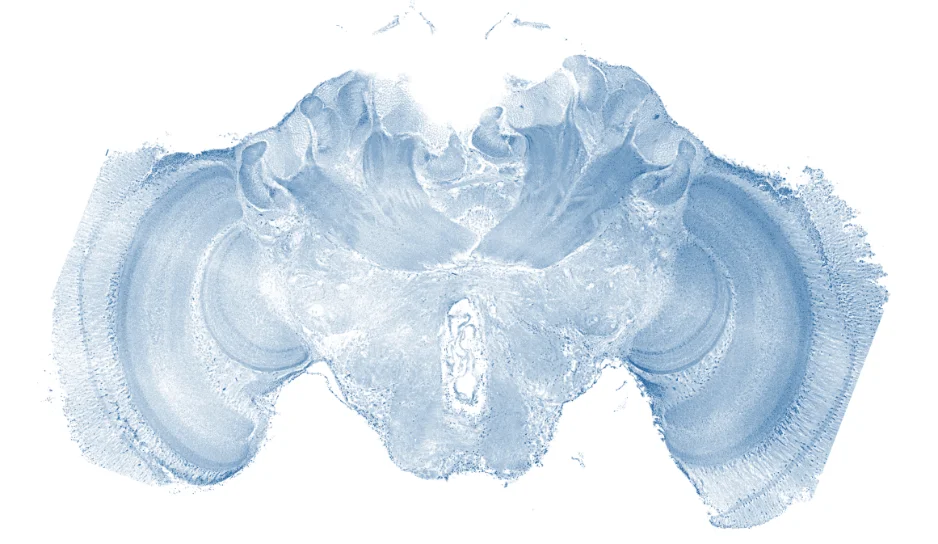
Honeybees display sophisticated visual learning relative to other insects. Using the honeybee mushroom body as a case study, we compare its circuit architecture to that of the fly to identify molecular and cellular innovations that may explain enhanced visual cognition — building toward a general account of how to construct, scale, and operate neural circuits for visual perception.
Image: Confocal image of a worker honeybee brain.
People

Emily L. Heckman, Ph.D.
Incoming Assistant Professor, Department of Biological Sciences, Lehigh University
Emily Heckman is an incoming Assistant Professor in the Department of Biological Sciences at Lehigh University, joining July 2027. She is currently an HHMI Hanna H. Gray Postdoctoral Fellow at the University of Michigan, where she works with Dr. E. Josie Clowney to understand how neural circuits are built to support visual perception and learning. She earned her Ph.D. in Biology at the University of Oregon under Dr. Chris Q. Doe, studying how developing neurons shape dendrite formation through cell contact and activity. Her work has been recognized with the HHMI Hanna H. Gray Fellowship, the McKnight Endowment Fund's Allison J. Doupe Fellowship, the Michigan Neuroscience Institute's Outstanding Postdoctoral Fellow Award, and the Leading Edge Fellows Program.
Dr. Heckman is a Lehigh alum, and is looking forward to training and working alongside the next generation of Lehigh scientists.
Lab members will be listed here as they join the lab! Interested in joining? Visit the Contact page to learn how to apply.
Publications
* co-first authors # co-corresponding authors
{{ pub.title }}
Featured{{ pub.noteRest }}
{{ pub.authors }} ·
Contact
Prospective students, postdocs, and collaborators are welcome to reach out — the lab opens July 2027 and we're happy to hear from you before then.
Department
Department of Biological Sciences
Lehigh University
Bethlehem, PA
How to Apply
{{ grp.textBefore }}{{ grp.linkLabel }}{{ grp.textAfter }}
{{ grp.text }}